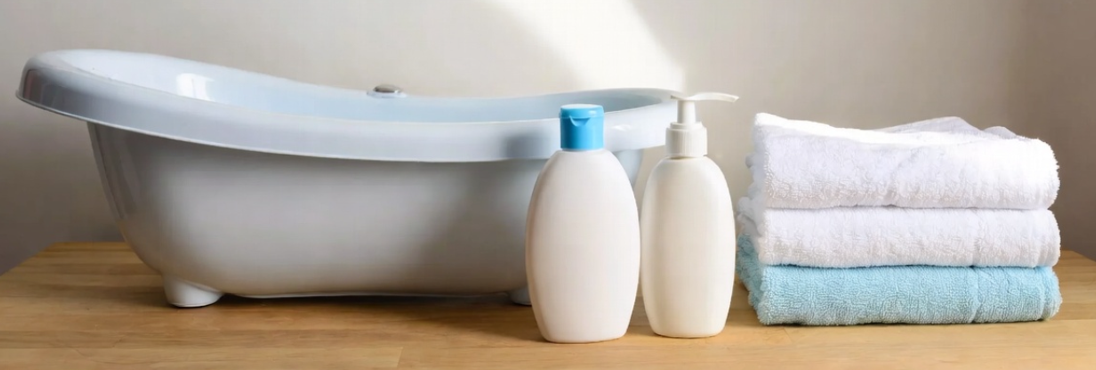
Bathing a newborn can feel a little nerve-racking at first—especially for new parents. The good news? Newborns don't need frequent baths, and with the right setup, bath time can become a calm and comforting routine for both you and your baby.
This guide walks you through when to bathe a newborn, how often, how to do it safely, and what to look for during bath time—all in a gentle, parent-friendly way.
When Should You Bathe a Newborn for the First Time?
Most pediatricians recommend waiting 24 to 48 hours after birth before giving a newborn their first bath.
Why waiting matters:
- Helps maintain body temperature
- Protects delicate newborn skin
- Allows the vernix caseosa (the natural white coating on baby's skin) to absorb and moisturize
Until the umbilical cord stump falls off—usually within 1 to 3 weeks—babies should receive sponge baths only.
How Often Should You Bathe a Newborn?
Newborns don't get very dirty, so daily baths aren't necessary.
Recommended bathing frequency:
- 2 to 3 times per week
- More often only if needed (diaper blowouts, spit-ups, or messy days)
Over-bathing can dry out your baby's sensitive skin. On non-bath days, simply clean the face, hands, neck folds, and diaper area.
How to Bathe a Newborn Safely
Sponge Bath for Newborns
Sponge baths are best until the umbilical cord stump has fully healed.
What you'll need:
- Soft baby washcloth
- Mild, fragrance-free baby wash
- Warm water
- Hooded baby towel
Many parents prefer gentle baby cleansers made for sensitive skin, as they are less likely to cause irritation.
Steps:
- Choose a warm, draft-free room
- Lay your baby on a padded, flat surface
- Keep baby wrapped in a towel, uncovering one area at a time
- Clean gently, starting with the face (water only)
- Dry thoroughly, especially skin folds
Tub Bath for Newborns
Once the cord stump has fallen off, you can switch to tub baths.
Helpful items parents often use:
- Infant bathtub or newborn bath insert
- Baby thermometer for water temperature
- Tear-free baby shampoo and wash
- Non-slip bath support
How to do it safely:
- Fill the tub with 1–2 inches of warm water
- Water should feel warm, not hot (about 98–100°F / 37–38°C)
- Support your baby's head and neck at all times
- Wash gently from clean areas to dirtier ones
- Keep bath time short—5 to 10 minutes
Wrap your baby in a soft towel immediately after the bath to help retain warmth.
What to Look for During Bath Time
Bath time is also a great moment to check your baby's skin and overall comfort.
Watch for:
- Dry or flaky skin
- Red patches or rashes
- Cradle cap on the scalp
- Redness in skin folds
- Irritation or discharge around the belly button
Many parents find that gentle baby lotions designed for newborn skin help keep skin moisturized after bathing.
If you notice persistent irritation or anything concerning, contact your pediatrician.
Newborn Bath Safety Tips Every Parent Should Know
Safety always comes first during bath time.
Important safety reminders:
- Never leave your baby unattended—not even for a moment
- Always keep one hand on your baby
- Test water temperature before placing baby in
- Use only baby-safe, fragrance-free products
- Keep all supplies within arm's reach
Babies can become cold quickly, so a warm room and a quick bath are best.
Final Thoughts for Parents
Bathing a newborn doesn't have to be stressful. With gentle products, simple routines, and a focus on safety, bath time can become a peaceful moment of connection between you and your baby.
As your confidence grows, so will your baby's comfort—and soon, bath time may even become something you both look forward to.
⚠️ Disclaimer
This article is for informational purposes only and is not intended as medical advice. Always consult your pediatrician or a qualified healthcare provider with questions about your baby's health, skin care, or bathing routine.
The Name and Nurture Team
Editors & Parenting Curators
The Name and Nurture Team curates evidence-based articles and real-world tips to support new and expecting parents on their journey.